
The 25% council tax discount for living alone, and when your band is worth a second look
If only one adult counts as living in a home, the Council Tax bill falls by 25%, and some adults are not counted at all. How the discount works, who is disregarded, and how to ask the Valuation Office to review a band that looks wrong.
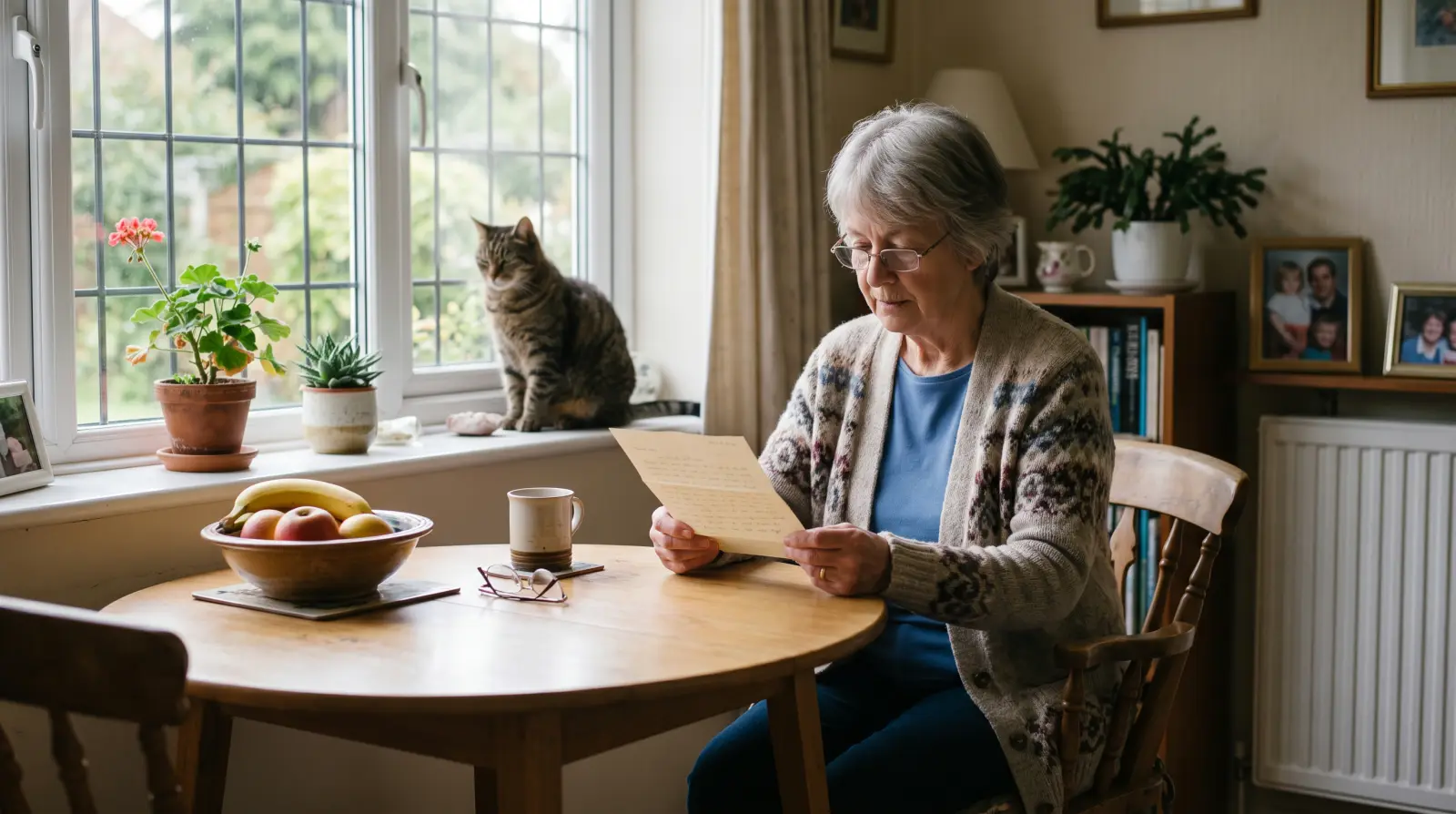
Council Tax is one of the few household bills that does not care how much you use. A couple and a large family in the same house pay the same. But the bill does change with the number of adults who count as living there, and with the band the home was put in decades ago.
The best known adjustment is the single person discount: 25% off the bill when only one adult counts as living in a home. Less well known is the list of people who are not counted at all, and the process for asking the Valuation Office to look again at a band that seems wrong. Both can make a lasting difference, and neither costs anything to ask about.
 In short
- 25% off if you live alone, or if everyone else in the home is disregarded; 50% off if everyone is disregarded.
- Discounts are applied for through your council. They are not always added automatically.
- Bands rest on values at 1 April 1991 in England and 1 April 2003 in Wales.
How the 25% discount works
Council Tax assumes two adults live in a home. You get 25% off your bill if you pay Council Tax and you live alone, or if everyone else living with you is "disregarded", meaning they are not counted. If everyone living in the household is disregarded, the reduction is 50%. The discount is applied for through your local council, which can ask for evidence and will expect to be told if your circumstances change.
The people who are not counted
GOV.UK lists the groups who are disregarded when the council works out how many adults live in a property. They include:
- children under 18, and 18 and 19-year-olds in full-time education;
- full-time college and university students, nursing students and certain apprentices;
- under-25s who get funding from the Education and Skills Funding Agency;
- people with a severe mental impairment;
- live-in carers who look after someone who is not their partner, spouse or child under 18;
- foreign language assistants registered with the British Council, and people with diplomatic status.
So a parent living with a son or daughter at university, or a widow living with an adult child who is a full-time student, can still receive the 25% discount. Someone who cares for a person with dementia may find that person is disregarded too.
 Worked example · illustrative only
| Household | Adults counted | Discount | Annual bill |
|---|---|---|---|
| Two working adults | 2 | None | £2,300 |
| One adult living alone | 1 | 25% | £1,725 |
| Parent plus full-time student | 1 | 25% | £1,725 |
| Every adult disregarded (for example a live-in carer and a person with a severe mental impairment) | 0 | 50% | £1,150 |
The £2,300 full bill is invented for illustration. Bills vary by council, band and area. Homes occupied only by full-time students are usually exempt altogether rather than discounted; your council can confirm.
When the discount stops
The discount depends on who lives in the home, so it ends when another counted adult moves in: a new partner, an adult child who has finished studying, or a lodger. If you are thinking about taking in a lodger, weigh the loss of the discount against the income; our article on Rent a Room relief covers the tax side. Councils check entitlement, and backdated bills can follow if a change is not reported.
Is your band right?
Every home in England sits in a band based on what it would have been worth on 1 April 1991; in Wales the date is 1 April 2003. Bands were set quickly, and some homes ended up in a higher band than similar neighbours. Each band is a fixed fraction of Band D, so in England a Band C home pays eight-ninths of the Band D charge. Moving down one band can therefore lower the bill every year, and the council refunds any overpayment for the period the wrong band applied if the change is confirmed.
Two routes to a challenge
In England and Wales, challenges go to the Valuation Office. In Scotland, they go to the local assessor.
- A formal proposal. You have a legal right to challenge if you have been paying Council Tax on the property for less than six months, if the Valuation Office changed the band in the last six months, or if there has been a change that affects the property. A decision can take up to four months, and you can appeal it to the Valuation Tribunal: within three months in England and four months in Wales.
- A band review. If you have paid for longer and nothing has changed, you can still ask for a review. You need the addresses of up to five similar properties in a lower band, matching yours in type, size, age and style, and in the same street or estate in a town, or the same village or area in the countryside. Sale prices of your home or similar homes between 1 April 1989 and 31 March 1993 (England), or 1 April 2001 and 31 March 2005 (Wales), can also help. A review can take up to twelve months, and there is no appeal.
The Valuation Office says average house price figures from property websites are not strong evidence. Real comparable homes are what count.
Other help with the bill
Councils also run Council Tax Reduction schemes for people on low incomes, and the rules differ from area to area. If money is tight, ask your council what it offers. Households receiving means-tested benefits may also qualify for help with energy, broadband and water bills, which we cover in our Warm Home Discount guide and our article on social tariffs.
Who this matters for, and what to check
Check the discount if you live alone, if your only fellow adult is a student, carer or someone with a severe mental impairment, or if your household has recently changed. Check the band if your home looks like those around it but sits higher, or if you have moved in within the last six months. Both are free: there is no need to pay a company to do it for you.
The takeaway
A quarter off a bill that runs to thousands of pounds a year is worth confirming. Look at who counts as living in your home, and if your band looks out of line with similar neighbours, gather the evidence before asking for a review. Your council's website and GOV.UK have the forms.
 Official sources
General information, not advice
This article is sponsored information from OST Consulting OÜ, the publisher of Ichslta (company details). Ichslta is a private website. It is not published by, or affiliated with, HM Revenue & Customs, the Department for Work and Pensions, GOV.UK, any council or any other government body. It is general information, not personal tax, legal or financial advice, and it does not recommend any product or provider.
Figures are the official rates for the year stated or clearly labelled illustrations; what any one person pays, receives or can claim depends on their own circumstances. Rates and thresholds can change, including at the Autumn Budget on 28 October 2026. This site processes no applications and charges no fees. Never give your National Insurance number, bank details or Government Gateway or GOV.UK One Login details to a website in response to an article. For your own position, use GOV.UK or contact the organisation concerned directly.
 Free, every Friday
The Friday Sheet: one page on what changed for your money this week.
Tax, savings, bills and family money in the UK, with the official source for every figure. Nothing to buy.
We email a confirmation link first; you are only added once you click it. Unsubscribe whenever you like.
 Income tax